June 30, 2026
From Vision to Reality: The Story Behind Bainland
Some guests call Bainland their “happy place.”
It’s a phrase Owner Simon Craddock hears often, and one that means more to him than any award, glowing review, or industry recognition ever could.
When Simon and his family bought Bainland in 1999, creating one of the UK’s most distinctive luxury lodge retreats wasn’t part of some grand master plan. Back then, Bainland was primarily a touring caravan site with around 20 bungalows and a loyal customer base who loved returning year after year.
What Simon saw, however, was something bigger.
He saw potential in the mature trees, the winding hedgerows and the natural sense of space that already existed across the site. He saw an opportunity to create somewhere that felt different from the traditional holiday parks that dominated the market at the time, somewhere that would prioritise privacy over density, personality over profit, and quality over convenience.
More than 25 years later, that vision has become reality.
Today, guests wake to birdsong across the lakes, unwind in private hot tubs tucked behind mature hedges, enjoy long lunches in the restaurant and watch wildlife from lodge terraces overlooking the water. Families gather for milestone celebrations, couples escape the pressures of everyday life, and dog owners return knowing their four-legged family members will be welcomed just as warmly as they are.
Yet despite all that has changed, the philosophy behind Bainland remains remarkably simple.
“We care. We really do,” says Simon. “This is not just a business; this is a passion project.”
A Vision Worth Fighting For
When Simon took over the family business in 2005 following his father’s illness, Bainland was already well loved by its customers. But he couldn’t shake the feeling that it could become something far more special.
The challenge was convincing everyone else.
For years, planning applications to transform the site from a traditional touring park into a luxury lodge retreat proved frustratingly difficult. Progress was slow, and there were plenty of moments when taking the easier route would have made commercial sense. Nonetheless, remained convinced Bainland deserved more.
“We knew the site was too good to keep just for touring,” he recalls. “It had a mature layout of hedges and trees, which ideally lent itself to a laid-back lodge park.”
When planning permission was finally secured in 2010, the real work began.
At a time when many developments were focused on maximising lodge numbers, Simon had a different vision. Bainland would not be built around squeezing as many units as possible into a given space but would be built around the landscape itself.
“Unlike many parks, we wanted an organic feel to the place,” he explains. “We didn’t want to create rows of lodges which, while a cheaper way of building, removes the personality of the park.”
Instead, the landscape would lead the design. “We build where the land tells us.” It’s a deceptively simple philosophy, but one that has shaped every decision made at Bainland since.
Rather than forcing nature to fit a development plan, all development plans adapt to nature. The result is a retreat that feels as though it has evolved naturally from its surroundings. With the lodge layout echoing that of a village, it aligns with its idyllic setting on the outskirts of Woodhall Spa.
Even today, guests often comment on the sense of calm they feel as they drive through the gates. The mature trees, open spaces and carefully considered layout immediately signal that Bainland is somewhere designed to help people slow down.
Why Privacy Became Everything
As Bainland evolved, Simon recognised a clear gap in the staycation market.
Many lodge parks looked appealing in brochures and photographs, but the reality could feel very different. Lodges often overlooked one another, outdoor spaces lacked privacy and guests never quite achieved the sense of escape they were hoping for.
Simon believed there was room for something better. He wanted Bainland to occupy the space between traditional holiday parks and premium brands like Centre Parcs, offering luxury accommodation without sacrificing tranquillity, privacy or personal space.
That commitment would go on to define the Bainland experience.
“Privacy and space were the ethos of the park, not something that is always easy to put across on a website.”
Guest feedback only strengthened that conviction.
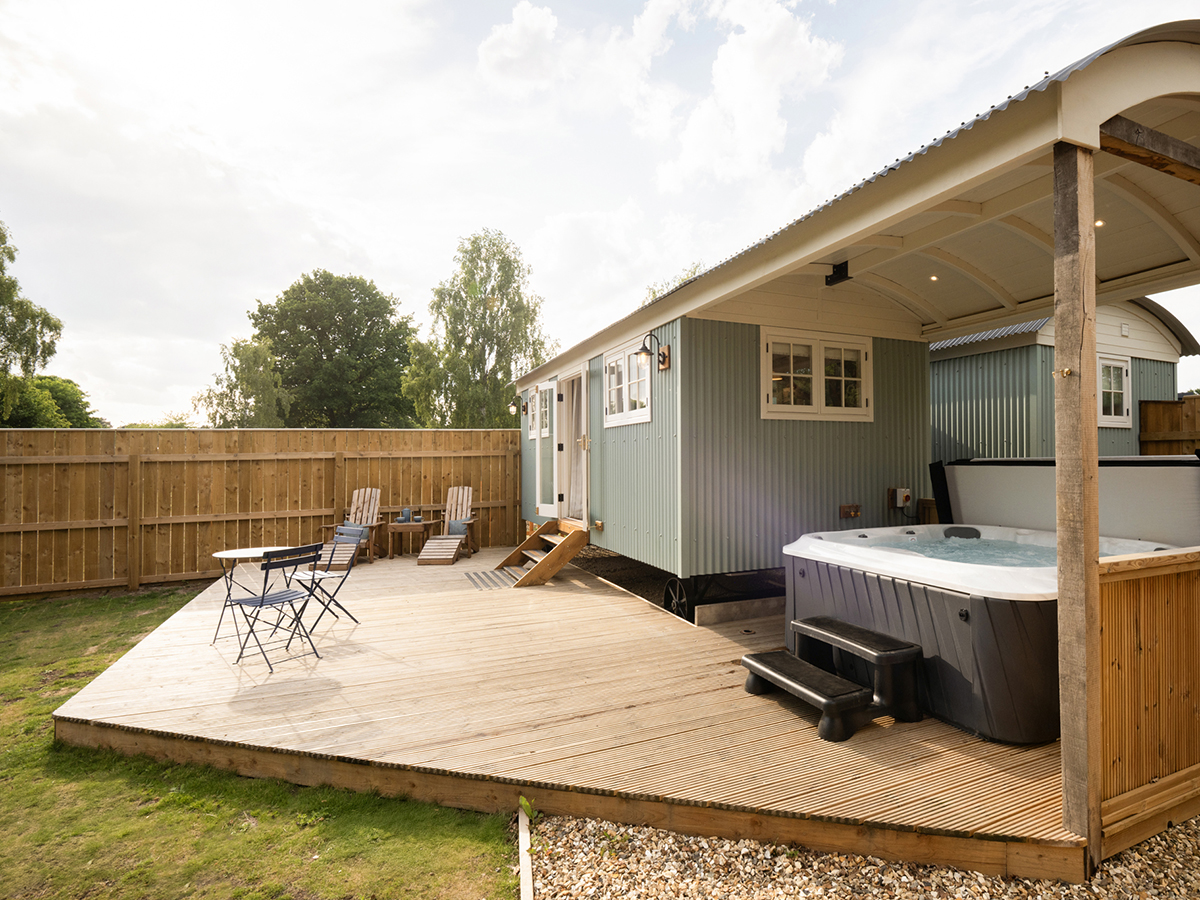
When Bainland introduced hot tubs, one question came up more than any other. “Can anyone see me getting in and out of my hot tub?” It was a simple question, but it revealed something ultimately important. People weren’t simply looking for luxury, they were looking for comfort, seclusion and the freedom to fully relax. They wanted to feel comfortable, relaxed and completely at ease. Listening to those concerns helped sharpen Bainland’s philosophy. Existing hedges were preserved, new planting schemes were introduced, and lodge layouts were carefully planned to ensure guests felt secluded without feeling isolated.
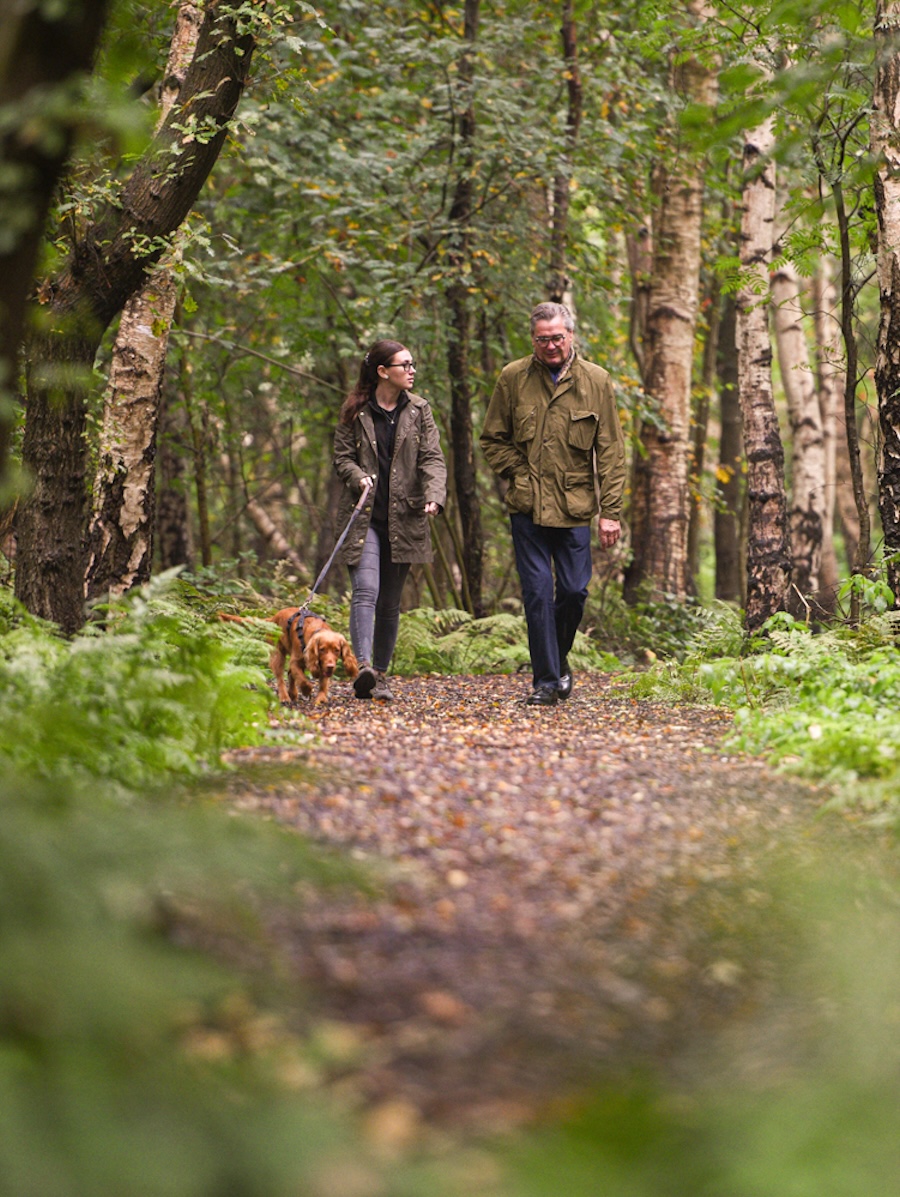
This same thinking eventually helped shape Bainland’s hugely successful dog-friendly offering. Secure fencing, private gardens and spacious outdoor areas made the site ideal for guests travelling with pets.
At a time when many holiday parks restricted dogs to older or less desirable accommodation, Bainland took a different approach.
“We felt that people’s dogs are one of the family and so should be treated the same on site.”
It was another decision that challenged industry convention, but guests responded enthusiastically.
Today, Bainland has built a loyal community of dog owners who return year after year, knowing their pets will receive the same warm welcome they do.
Building a Dream, One Step at a Time
Looking around Bainland today, it’s easy to forget just how much patience was required to get here.
The transformation wasn’t funded by major investors or backed by a large corporate parent company. It was driven by a small independent business that continuously reinvested in its future. Every new lodge, every renovation and every improvement represented another step forward.
“The most frustrating aspect of building the park as a small independent company was that we had to build and renovate as many lodges as possible first, then be able to afford and sustain the main building renovation.”
For years, old and new existed side by side. One corner of the park might have been newly transformed while another still reflected Bainland’s earlier days.
“It was a scary prospect,” Simon admits.
“As a small independent company, we had no defined plan, just a hunch that what we were doing would be wanted by enough people.”
For years, guests were effectively buying into a vision that only Simon and his team could fully see. They trusted that the construction work, constant improvements and ongoing investment would eventually become something extraordinary. That trust proved invaluable.
Looking back, Simon believes the slower pace may actually have benefited Bainland. “Doing the park slowly allows us to take stock and do things gradually, which ultimately makes the park more interesting.”
It created opportunities to learn, refine and improve. Each development informed the next. Every lesson helped shape future decisions.
“Although we’re still making mistakes,” he adds with a smile.
That honesty is perhaps one of the reasons Bainland feels so authentic. It has never tried to present itself as finished or perfect. Instead, it has remained committed to continuous improvement.
Taking Risks and Trusting Instincts
Some of Bainland’s most successful decisions were also its most unconventional, with one of the boldest, which came in 2014.
Rather than demolishing old toilet blocks, Simon and his team transformed them into seven-bedroom luxury lodges designed specifically for larger groups and multi-generational family holidays. At the time, very few operators were targeting that market. In fact, many people believed the idea simply wouldn’t work.
“Our Online Travel Agent at the time thought it wouldn’t work or have a market.”
Fortunately, Simon trusted his instincts.
From the moment they opened, the lodges proved incredibly popular. Families embraced the opportunity to holiday together under one roof while still enjoying the space, privacy and quality that Bainland had become known for. The success of those larger lodges helped propel the business forward, generating momentum through social media, word of mouth and returning guests.
Another major decision involved ownership.
Many holiday parks finance growth by selling lodges to private owners. It creates immediate capital and makes expansion significantly easier. Simon deliberately chose not to. “We chose to never sell lodges at Bainland to private owners.”
The easier financial route wasn’t necessarily the right one. “We wanted to ensure we can keep the park to our standards and be in control of all aspects,” he adds. It allowed Bainland to maintain consistency, quality and character across the entire site, despite slower growth. Maintaining complete control over the guest experience remained paramount.
This approach has required greater patience and greater risk, but it also ensured Bainland could continue evolving exactly as Simon envisioned – not according to quarterly targets or shareholder expectations, but according to what create the best possible experience for guests.